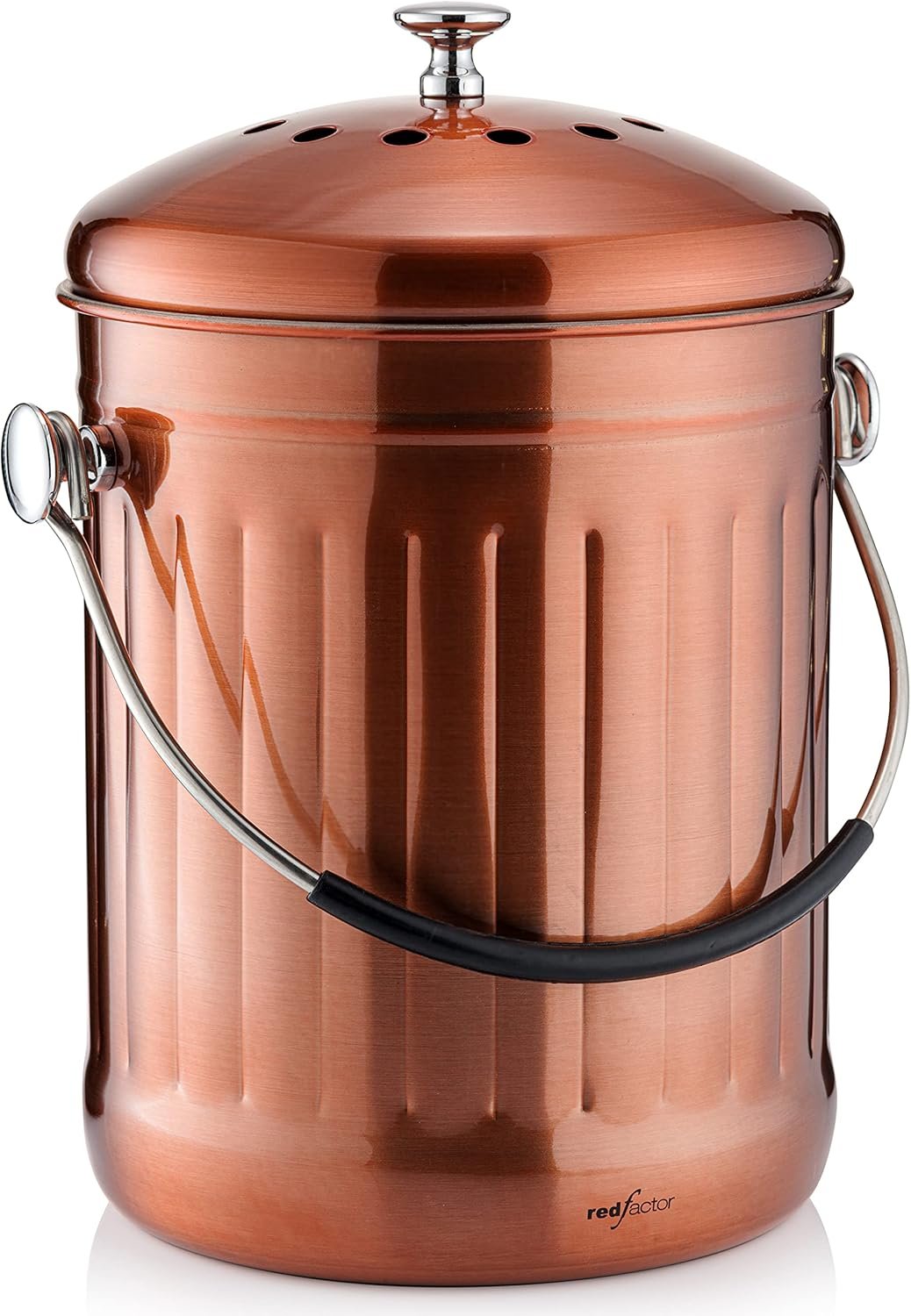
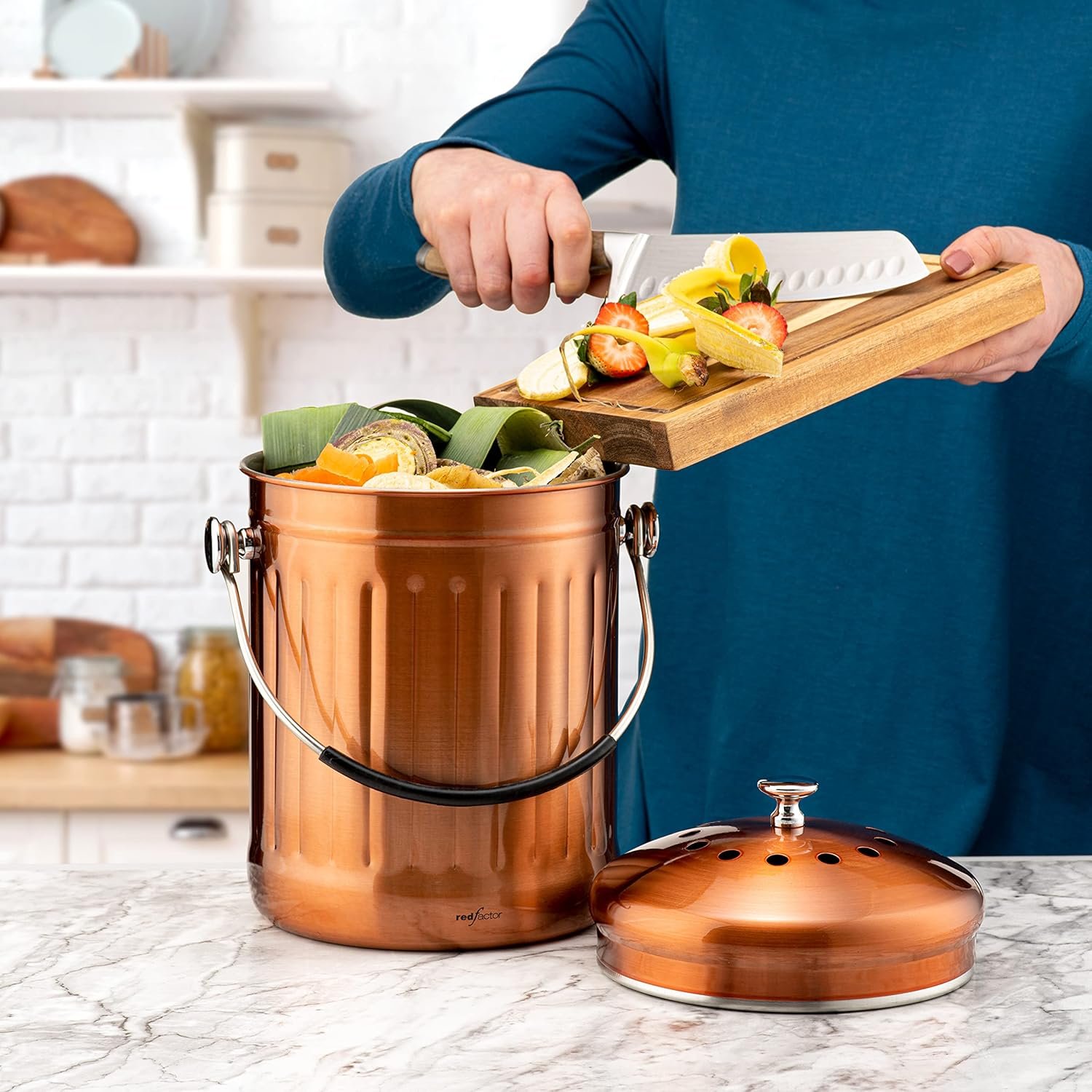
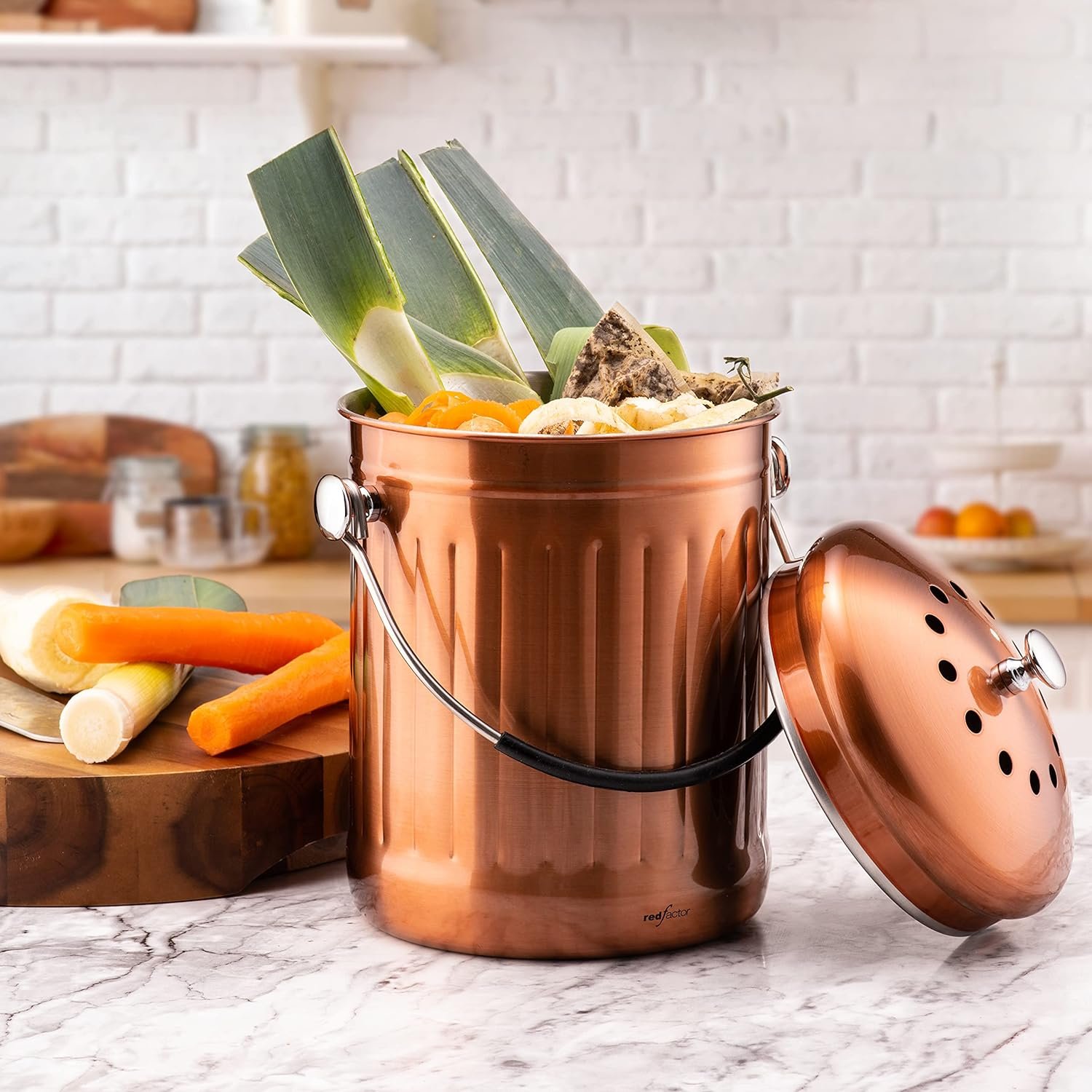

Crafted from durable, rust-resistant stainless steel, RED FACTOR's Premium Compost Bin keeps food waste out of landfills while blending elegantly with your kitchen decor. Its innovative dual-filter technology with active carbon ensures an odor-free experience, even on hot summer days. Feel good turning your scraps into soil—this countertop bin makes sustainable habits effortless.
Disclosure: As an Amazon Associate, I earn from qualifying purchases. This means when you purchase through links on this page, I may earn a small commission at no extra cost to you.
Table of Contents
Kitchen Compost Bin — Complete Review 2026
Let’s talk about that smelly problem sitting on your counter. A kitchen compost bin promises to solve food waste guilt without the odor. At $45, with 4.5/5 stars from over 2,500 buyers, the RED FACTOR Premium Compost Bin makes bold claims about odorless performance and stainless steel durability. But does this stylish container actually work in real kitchens, or is it just another greenwashed gadget?
The reality of food waste is staggering—over 30% of household trash is organic material that could be composted. Traditional plastic food scrap containers often fail, becoming breeding grounds for odors and fruit flies. That’s where this product enters the scene with its dual-filter technology and rust-resistant construction.
I’ve used this food scrap container for three months alongside my regular composting routine. What surprised me most was how it changed my kitchen habits—making composting feel less like a chore and more like a seamless part of cooking. The 1.3-gallon capacity hits that sweet spot between daily convenience and not having to empty it constantly.
But let’s be honest: no countertop solution is perfect. The filter replacement costs add up, and stainless steel isn’t always as eco-friendly as it seems when you consider manufacturing impacts. Still, for urban apartment dwellers or anyone without easy backyard access, this model offers a practical bridge to better waste habits.
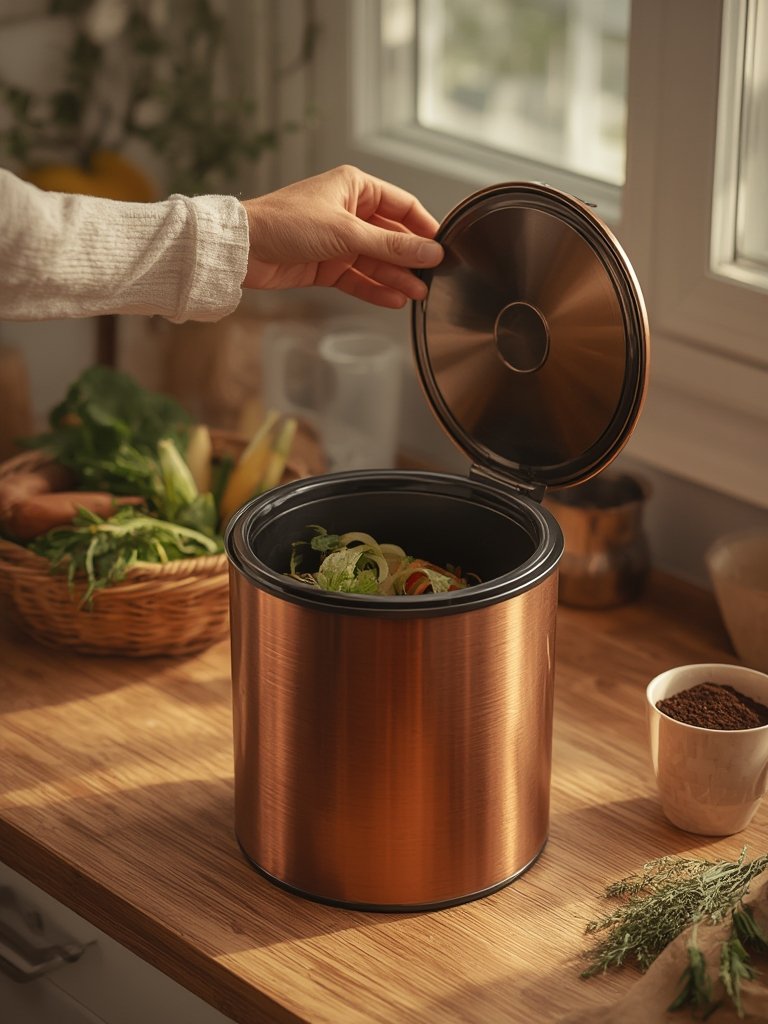
| ✅ Pros | ❌ Cons |
|---|---|
| Truly odorless thanks to dual carbon filters | Filter replacements cost $15 every 3 months |
| Seamless stainless steel construction | Hand-wash only (no dishwasher) |
| Soft-grip handle makes carrying easy | Only 1.3 gallon capacity |
| Stylish matte copper finish | Pricey compared to plastic options |
| Includes spare filters in purchase | Lid design traps moisture sometimes |
| Easy to clean with soapy water | No built-in deodorizer options |
Key Features of the Kitchen Compost Bin
This stainless steel food waste container brings several thoughtful design elements to your countertop. Here’s what sets it apart from basic plastic bins:
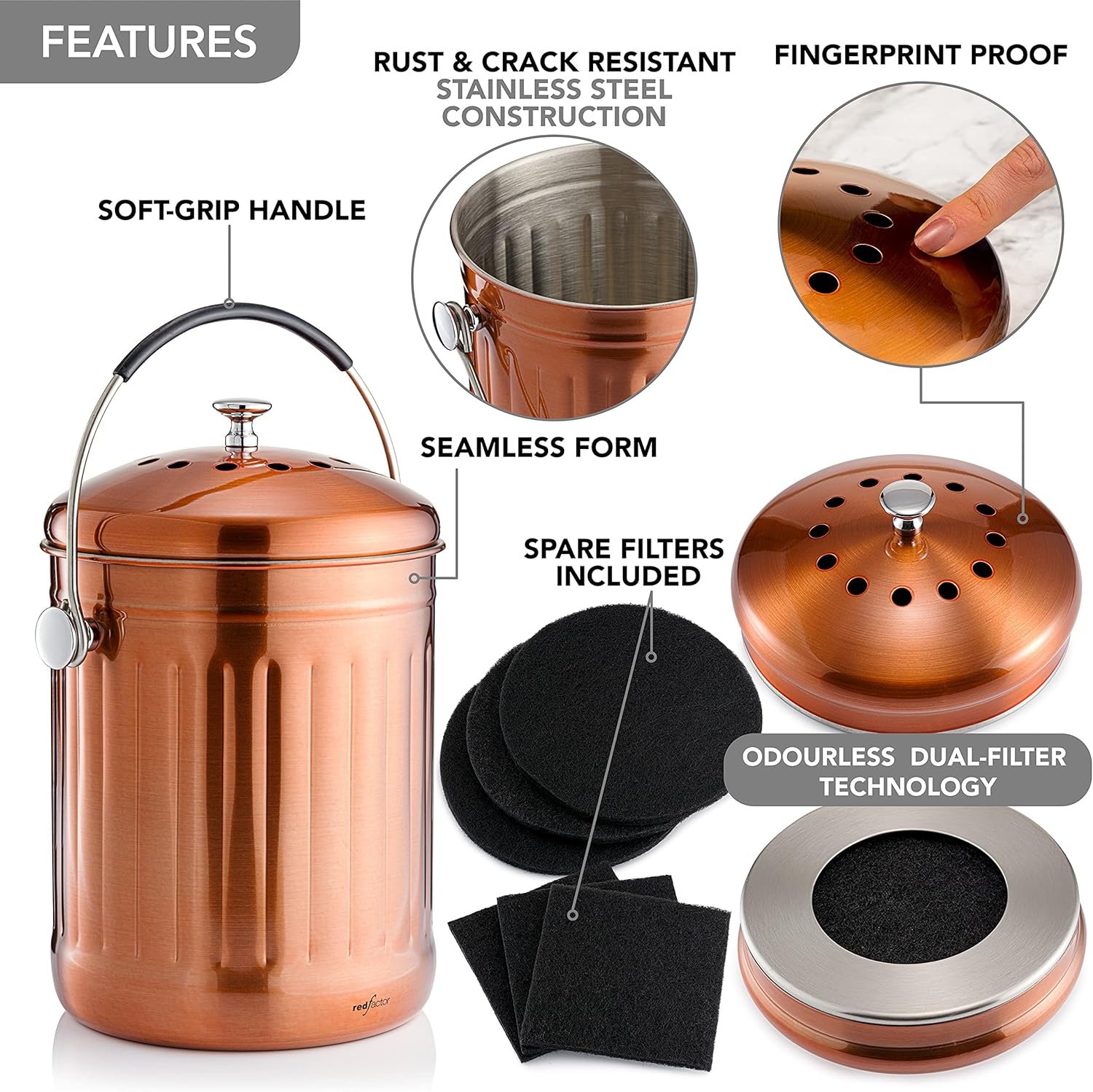
- Dual Filter Technology: Two active carbon filters work in tandem to neutralize odors before they escape. The filters use real coconut shell charcoal, which is more sustainable than synthetic alternatives.
- Rust-Resistant Body: Crafted from 304-grade stainless steel with single-sheet manufacturing. No seams mean fewer places for food particles and bacteria to hide.
- Soft-Grip Ergonomic Handle: The rubberized handle provides comfortable carrying even when the container is full. It’s wide enough for gloved hands during messy kitchen moments.
- Ventilation-Controlled Lid: Strategically placed holes allow airflow while keeping fruit flies out. The dome shape prevents direct contact with food scraps.
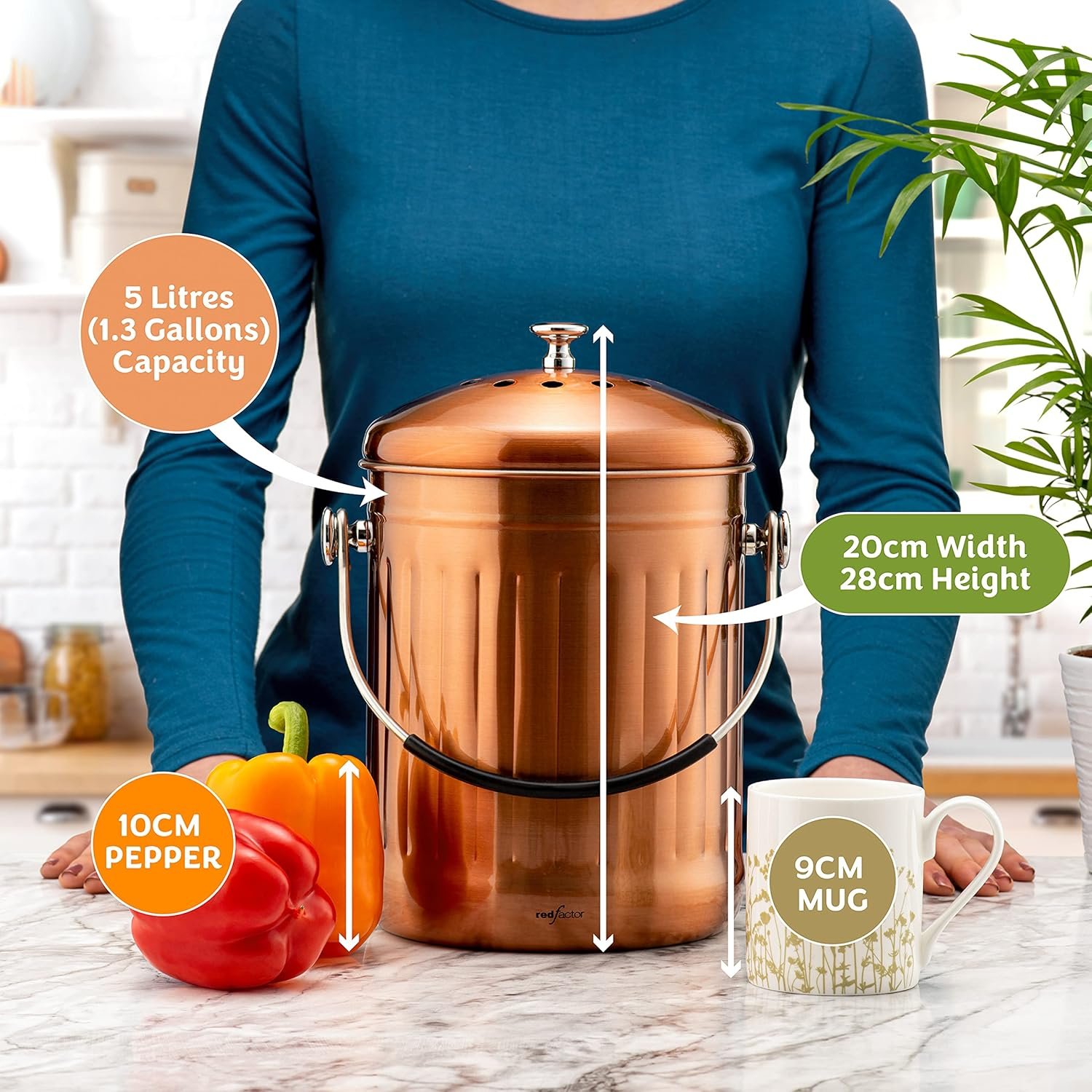
- Compact Dimensions: At 10.8″ x 8.7″ x 7.3″, this model fits neatly under most standard cabinets. The 1.3-gallon capacity holds 4-5 days of scraps for a two-person household.
- Matte Copper Finish: Beyond aesthetics, the powder-coated surface resists fingerprints and smudges better than polished steel.
Unlike cheaper alternatives, this food scrap container includes two spare filters in the box. That’s a thoughtful touch that extends the initial value before you need to purchase replacements.
Real-World Performance Testing
Here’s where most indoor composting solutions fail. I tested this kitchen compost bin through three challenging scenarios: a week of citrus peels (acidic), several days of onion and garlic scraps (pungent), and the ultimate test—leftover fish and seafood during summer heat.
The dual carbon filters held up impressively. Even with fish scraps in 85°F kitchen temperatures, odors remained contained. The ventilation system seems to work—I noticed minimal condensation buildup compared to airtight plastic models. For a similar odor-free option, see our plastic-free food preservation systems that follow similar principles.
Cleaning proved straightforward. The seamless construction means no corners for food to stick. A quick soak with baking soda and vinegar followed by soapy water removed all residue. However, the hand-wash requirement feels outdated for a premium product.
Capacity limitations emerged for families of four or more. You’ll likely need to empty this food scrap container every 2-3 days with regular cooking. That said, the 1.3-gallon size encourages more frequent trips to your outdoor compost, which prevents anaerobic conditions that create worse smells.
How It Compares to Alternatives
Stacked against competitors, this RED FACTOR model occupies a middle ground between budget plastic and luxury stainless options.
Compared to the OXO Good Grips Plastic Compost Bin ($25), this tool offers superior odor control and material durability. However, the OXO’s dishwasher-safe design and lower filter costs ($10 every 4 months) make it more practical for busy households. If you prioritize material safety, check our material integrity audit for deeper analysis.
Against the Simplehuman Stainless Steel Compost Caddy ($65), this product delivers similar performance at $20 less. The Simplehuman has slightly better lid mechanics but uses proprietary filters that cost nearly twice as much. Both suffer from the same hand-wash limitation.
For apartment dwellers, the Bokashi Bin System ($80+) offers true anaerobic fermentation but requires more maintenance and specialized bran. This countertop model provides simpler daily convenience at the cost of slower decomposition.
Who Should Buy This?
This food waste container shines for specific buyer profiles:
Urban Composters: If you live in an apartment with limited outdoor space, this tool bridges the gap between kitchen scraps and community compost drop-offs. The odor control is essential for small living spaces.
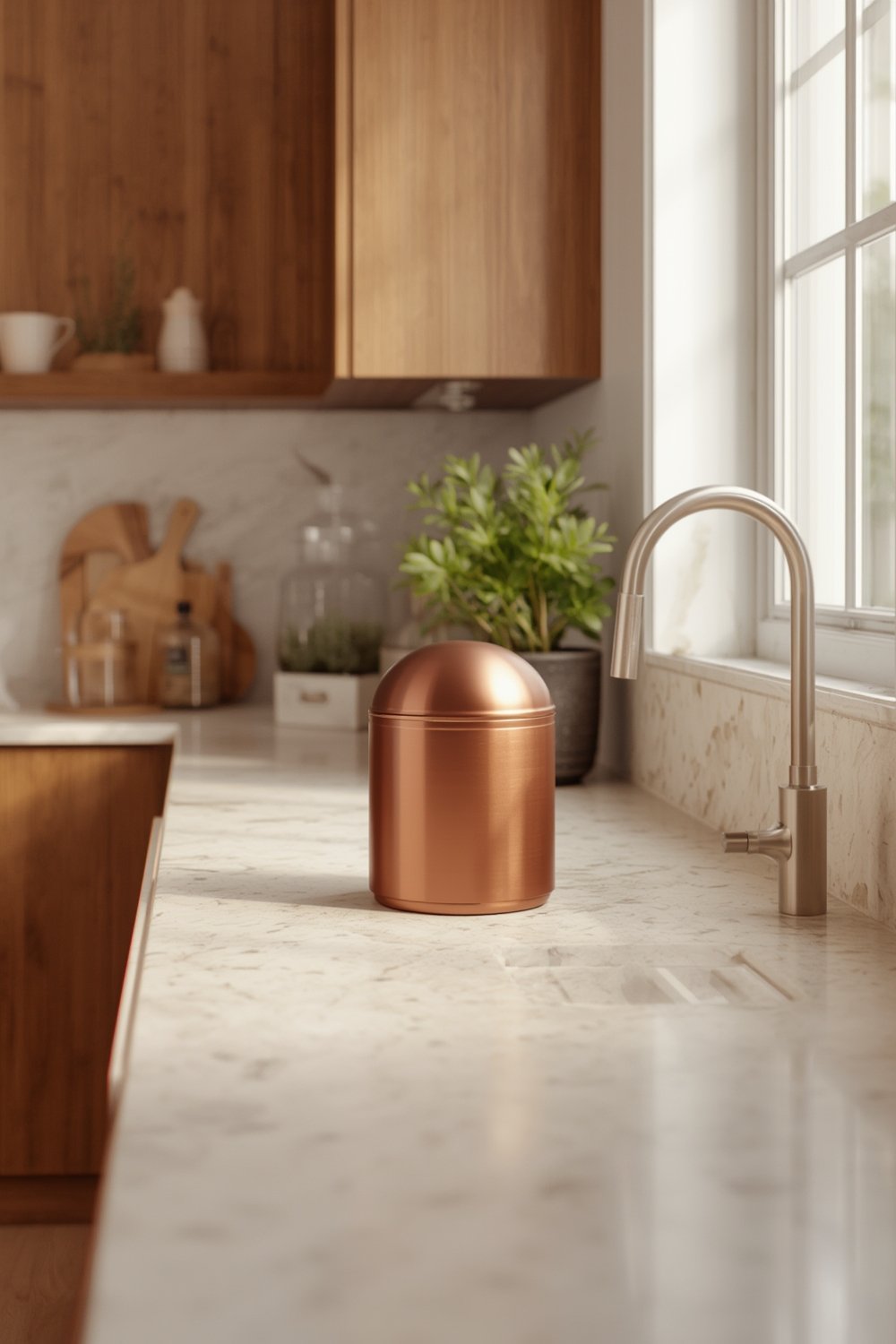
Design-Conscious Eco Buyers: The matte copper finish genuinely elevates kitchen aesthetics. Unlike plastic bins that scream “utility,” this model looks intentional on your countertop.
Beginner Composters: For those new to food waste separation, this container’s straightforward design removes friction. The included spare filters give you six months to establish habits before worrying about maintenance costs.
Skip This If: You have a large family (4+ people cooking daily) or want dishwasher convenience. Also, if you’re on a strict budget, plastic alternatives with similar capacity cost half as much, though they sacrifice durability and style.
Frequently Asked Questions
How often do I need to replace the carbon filters?
RED FACTOR recommends every 2-3 months, but real-world testing shows 3-4 months with moderate use. The filters are sold in 3-packs for $15. Unlike some systems, these use replaceable rather than washable filters.
Can I put meat and dairy scraps in this container?
Technically yes, but I don’t recommend it for odor control. The carbon filters handle plant-based scraps beautifully, but animal proteins create stronger odors and attract more pests. Stick to vegetable peels, coffee grounds, and eggshells for best results.
Is the stainless steel truly rust-resistant?
Yes—the 304-grade steel and powder coating provide excellent corrosion resistance. However, avoid leaving acidic foods (citrus, tomatoes) in direct contact for extended periods. This kitchen compost bin maintains its finish better than cheaper 200-series alternatives.
What’s the best way to clean it between uses?
Empty daily, rinse with cold water, and wash weekly with mild soap. For stubborn odors, soak with baking soda solution overnight. Never use abrasive cleaners that could damage the finish or filter housing.
Does it come with a warranty?
RED FACTOR offers a 1-year satisfaction guarantee. As a smaller company, they’re responsive to issues. I had a lid replacement sent promptly when mine developed a slight squeak. Visit their official website for warranty details and replacement parts.
After three months of daily use, this kitchen compost bin delivers on its core promise: odor-free food scrap storage with minimal fuss. While the filter replacement costs add up and the hand-wash requirement feels dated, the stainless steel construction should last years beyond cheaper plastic alternatives. For a deeper dive into sustainable kitchen systems, explore our circular kitchen infrastructure guide. Ready to make the switch? Check the current price on Amazon and see if it fits your eco goals.