

System Failure: Today’s Modular Refill Infrastructure promises efficiency and waste reduction, but persistent gaps in data, standards, and compatibility turn most new installs into guesswork. Instead of infrastructure-level certainty, decision-makers are left with product-level uncertainty and invisible risks. In this operational audit, we calibrate the market hype against the technical reality—exposing what property teams, architects, and manufacturers can (and cannot) reliably expect.
Audit Highlights
- Modular Refill Infrastructure lacks robust adoption, installation, and environmental data, unlike broader modular construction (valued at $90.3–102.6B in 2024).
- User pain points and long-term maintenance costs for built-in refill stations and permanent soap dispensers remain unquantified—real-world performance is still uncharted.
- Regulatory frameworks and code compliance for refill plumbing are undeveloped, amplifying investment and operational risks for new builds and retrofits.
- The Technical Blueprint: Setting Market Expectations vs. Reality
- Implementation & Systems Integration: Steps, Risks, Shortcuts
- Comparative Analysis & Fail Points: Where Systems Break
- Conclusion: The Final Verdict
- FAQ: Modular Refill Infrastructure
The Technical Blueprint: Setting Market Expectations vs. Reality
Modular Refill Infrastructure is marketed as a game-changing upgrade for kitchens, offices, and public spaces—elevating soap, detergent, and sanitizer refills from disposable afterthought to integrated building asset. In theory, this minimizes single-use plastics, automates supply, and cuts labor friction. In practice, infrastructure maturity still lags behind modular construction’s proven track record.
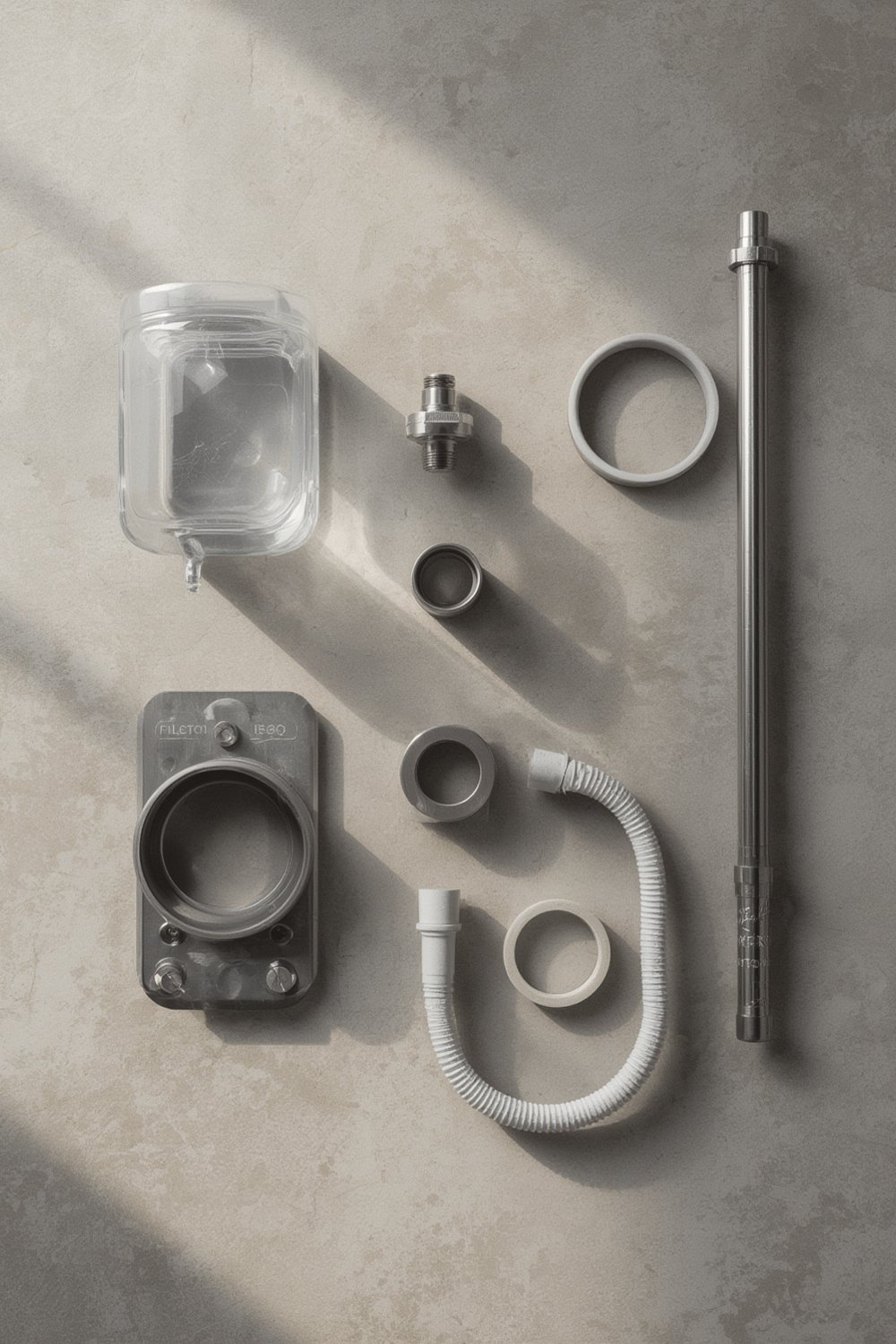
Despite modular construction’s established presence—estimated at $90.3–102.6 billion globally (Modular Industry Analysis), with US markets at $20.3 billion—there is a complete absence of granular market data for modular refill solutions. Most available statistics measure volumetrics or square footage in modular kitchen systems, not refill pipelines, built-in refill stations, or permanent soap dispensers.
Even with substantial 2024 capital investments (over $800 million), no entities offer asset-level metrics for modular refill installs—leaving architects, property teams, and manufacturers unable to forecast real-world adoption, cost or ROI. This information gap makes infrastructure-grade due diligence nearly impossible.
Decision-makers are forced to model assumptions backward from broader modular trends—without clear evidence that refill solutions deliver on long-term durability or waste elimination. Expectations must be recalibrated against this data vacuum.
Implementation & Systems Integration: Steps, Risks, Shortcuts
In the absence of standardized market stats and mature datasets, integration of modular refill infrastructure demands a site-specific, stepwise approach:
- Conduct a full audit of the modular kitchen system, mapping all cabinetry, service voids, and plumbing chases that could support refill lines.
- Source modular refill hardware (built-in refill stations, permanent soap dispensers) compatible with plumbing grade and cabinetry thickness.
- Assess pipe routing for compatibility with water temperature, pressure, and detergent/soap chemical resistance.
- Install refill vessels and access hatches where maintenance will not conflict with other building services.
- Plan accessibility for both end-users and custodial staff, avoiding hidden points likely to create service call outages.

It’s also critical to recognize that built-in refill infrastructure must be maintained on a par with plumbing or electrical. Yet, industry-wide, there are zero published benchmarks for installation or per-unit maintenance costs. Although modular builds routinely compress timelines—16 to 31 weeks versus nine months for conventional structures (Astute Analytica)—the absence of refill cost data means savings are only theoretical for now.
For more applied analysis of zero-waste and closed-loop design in the kitchen, see our full Circular Kitchen Infrastructure Hub audit.
Comparative Analysis & Fail Points: Where Systems Break
Key reporting gaps obstruct serious infrastructure investment in modular refill solutions:
- No user reviews or field reports exist for built-in refill stations or permanent soap dispensers as of 2024 (Reanin Modular Report).
- System compatibility (with existing modular kitchen systems) is treated as plug-and-play by manufacturers, but lacks documented stress tests—especially in mixed modules or complex floor cassette assemblies.
- Cost and regulatory impacts are mostly ignored by top competitor content. There is no published guidance on code compliance or long-term asset depreciation.
Maintenance teams may encounter hidden choke points if refill plumbing or access doors are installed with poor foresight—most notably in retrofit environments where cabinetry and original plumbing layouts are mismatched.
Even where modular construction cuts site waste by up to 83.2%—dropping landfill from 5,500 lbs to 1,380 lbs per home (Globe Newswire Analysis)—no quantifiable environmental benefits for modular refill infrastructure are available.
Below, a straight comparison between standard product-based approaches and EcoVerdict’s System Audit methodology:
| Criteria | Standard Refill Product | EcoVerdict System Audit Approach |
|---|---|---|
| Cost-per-use (5 years) | Untracked (variable; subject to supply contracts and local labor costs) | Estimated via kitchen audit and asset tracking—true cost unknown due to lack of market data |
| Durability & Maintenance | Limited data; frequent user complaints for countertop drip or jam (not tracked in built-ins) | Regular maintenance plan possible, but absence of pain point documentation frustrates prediction |
Systemic weaknesses—especially in code, life-cycle cost, and maintenance benchmarking—make infrastructure-level ROI impossible to quantify today.
For further insight into organization, maintenance and built environment impacts, visit our Ethical Organization & Lifestyle Systems audit and Smart Utilities & Eco-Tech Directory.

Conclusion: The Final Verdict
The pitch for Modular Refill Infrastructure as a materials-and-maintenance upgrade is still well ahead of the evidence. Market analysis, regulatory standards, and field-level performance reporting lag behind modular kitchen and bathroom systems—even as the desire for infrastructure-grade sustainability mounts.
Until quantifiable data, uniform code, and robust user performance metrics are available, all infrastructure-scale investments in refill are speculative. As it stands, modular refill infrastructure may be best approached as a pilot or testbed—tracked via thorough kitchen audits and documentation of every service call.
For decision-makers prioritizing zero-waste living and permanent hygiene infrastructure, the only reliable strategy is a phased approach rooted in site audits, hardware documentation, and collaboration with early adopters.
Ready to benchmark the future? Explore our full Circular Kitchen Infrastructure Hub audit for advanced modular kitchen systems, or compare with our Low-Impact Bathroom System Audit for next-gen refillable hygiene systems.
The EcoVerdict: For now, treat Modular Refill Infrastructure as a promising but unvalidated asset. Only those willing to audit, track, and adapt will convert pilot programs to enduring infrastructure.
FAQ: Modular Refill Infrastructure
What is Modular Refill Infrastructure?
It refers to built-in or integrated systems for storing, dispensing, and refilling liquids (like soap or detergent) within residential or commercial spaces—moving beyond disposable cartridges to infrastructure-grade solutions.
Are there standardized codes or regulations for refill plumbing?
No. As of 2024, no building codes or regional standards directly regulate refill plumbing or permanent soap dispensers. Compliance is based on general plumbing codes, which may not account for unique refill-related risks.
How does Modular Refill Infrastructure impact environmental performance?
While modular construction can cut site waste by over 80%, no quantifiable environmental or waste-reduction data exists specifically for modular refill systems. Benefits remain hypothetical until tracked at scale.
What are the biggest risks for property managers or architects?
The main risks are lack of installation/maintenance cost data, untracked system compatibility issues with modular kitchen systems, and unpredictable maintenance cycles due to the absence of field data.
Where can I find in-depth system audits for similar infrastructure?
See our full Circular Kitchen Infrastructure Hub audit, Ethical Organization & Lifestyle Systems audit, or the Smart Utilities & Eco-Tech Directory.
—

[…] Higher upfront, projected lower over time—pending audited operational lamp/maintenance data […]
[…] For facilities retrofitting legacy systems, prioritize modular architecture and ‘open’ filter access, as seen in other permanent infrastructure reviews (compare to modular refill plumbing in our Modular Refill Infrastructure Audit). […]
[…] Modular Refill Infrastructure audit covers how refill logic impacts other parts of the home, not just the […]
[…] typical paper filters by years, reducing annual consumable budgets to near zero. See our full Modular Refill Infrastructure audit for an extended methodology on embedding reusable systems across your […]